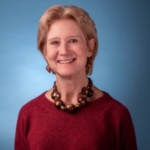
Elizabeth G. Taylor Executive Director, NHeLP
A number of years ago, I started a tradition of sharing my personal reflections at the year’s end with friends, colleagues, and supporters of the National Health Law Program (NHeLP). This is my last such message, as I will be retiring in March.
The first thing I want to say is thank you! Thank you for your support and partnership as we have worked to bend the arc toward health justice. That work will go on beyond any one of us, but I am deeply proud of what we have done together over the last twelve years.
This feels like a fitting moment to reflect on my professional journey, my years at NHeLP, and the state of our country.
I went to law school after two years at Yale Divinity School. I decided that I was not old or wise enough to be a priest but that limitation didn’t seem to be an obstacle to becoming a lawyer. I was blessed with extraordinary mentors. They made me promise not to become a legal cog in a corporate wheel. With them, I learned the importance of intentionally creating time and space to think really hard and make sense of work that at first seems impenetrable. My clerkships taught me that legal analysis is empty unless it is coupled with compassion for the people whose lives are impacted by the decisions judges make.
Those lessons sent me to the DC Public Defender Service, a law firm, the Justice Department and, ultimately, to NHeLP. Looking back, I think I was preparing for the role at NHeLP all along.
I came to NHeLP freely acknowledging how little I knew about Medicaid, and I have been generously taught by countless NHeLP staff members. It has been a joy to learn this work and to have an opportunity to translate it for different audiences, helping people with different backgrounds and beliefs understand why NHeLP’s work matters so much. Along the way, I found my voice as a passionate advocate for the low-income and underserved people whose access to health care often depends on NHeLP’s work. In a way, it brought things full circle — my role at NHeLP combines what drew me to both of the future careers, a priest and a lawyer, I imagined so many years ago.
NHeLP also gave me the privilege of connecting with people like you and discovering how deeply we share values and a commitment to reaching the day when health care is a right, not a privilege. Your friendship and support have helped shape me and NHeLP, and I am profoundly grateful. This community is a gift I will cherish even after my retirement.
While reflecting on my journey and my time at NHeLP is easy, reflecting on the state of our country is not. We are leaving the next generation a mess, with no clear path to cleaning it up. As I retire and pass the torch to the next generation, what do I tell them about their future?
I have found guidance in the determination of courageous leaders, past and present.
Martin Luther King required members of his peaceful resistance movement to take a ten-part pledge against violence, including this commitment: “Refrain from the violence of fist, tongue, or heart.” To me, that means we should stop ranting about what’s happening in our country and do all we can to make things better.
Dietrich Bonhoeffer, a German theologian who was imprisoned and ultimately put to death for his outspoken efforts to defeat Hitler and Nazism, had this to say from prison:
It is more sensible to be pessimistic; disappointments are left behind, and one can face people unembarrassed. Hence, the clever frown upon optimism. In its essence optimism is not a way of looking at the present situation but a power of life, a power of hope when others resign, a power to hold our heads high when all seems to have come to naught, a power to tolerate setbacks, a power that never abandons the future to the opponent but lays claim to it.
Bonhoeffer was also clear that if one is going to claim optimism, one must act to bring the future we want into being. I say let us claim optimism and together act to bring that future into being.
Jim Wallis, who leads the Center on Faith and Justice at Georgetown University, noted recently that few political leaders act on principle. Instead, they check which way the wind is blowing and go with the wind. Jim’s response: “We have to change the way the wind blows.”
That’s exactly what NHeLP and its community are doing. We are changing the way the wind blows and acting to bring the future we believe in into being. NHeLP has an ambitious plan to protect as many people as we possibly can from losing access to health care when the draconian cuts and congressionally-mandated obstacles to health care access go into effect. Our plan is called MASH, the Medicaid Access Strategy Hub, and you’ll hear a lot more about it in the coming months.
A holiday message I received earlier this month wished me happy holidays and “a fearless sense of hope.” I pass that wish on to you.
Let us go into 2026 with a fearless sense of hope, and together we will change the way the wind blows.
